top of page

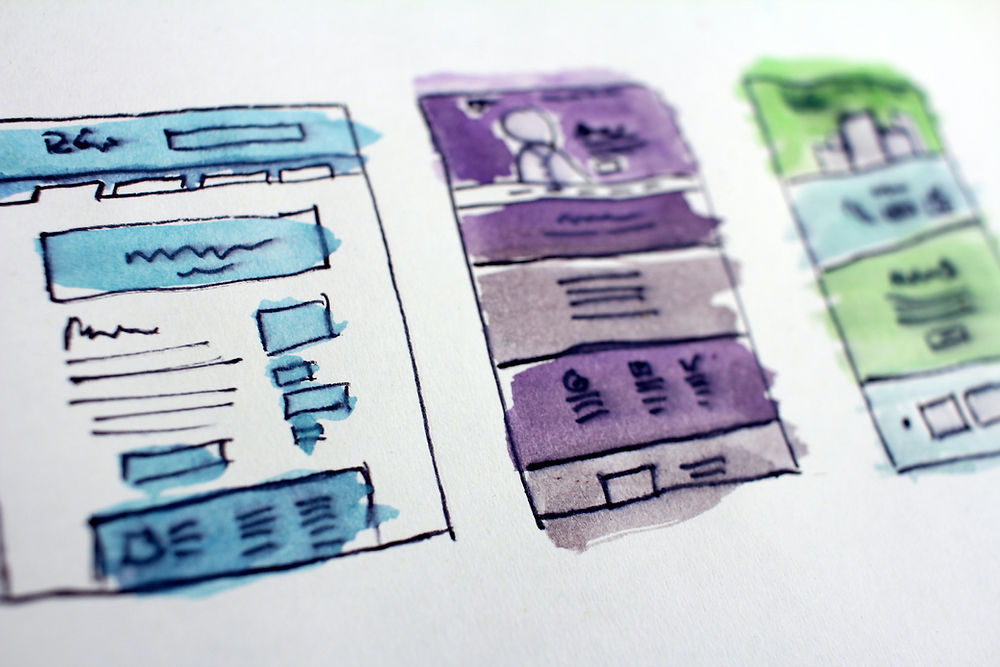
User Experience
The Felt Sense
Where we obsess over the tiny moments that make people love a product — or quietly rage-quit it. Real talk on how design choices feel before anyone bothers to explain why.


Employee Experience Doesn't Break. It Drifts.
Most leaders think employee experience is a state. Good or bad. Healthy or toxic. A number on an engagement survey that either clears the bar or doesn't. That's the wrong model. Employee experience is not a state. It's a slope. It drifts. Slowly, quietly, and mostly out of view — until one day the work is worse, the people are tired, and nobody can point to the moment it went sideways. There wasn't a moment. There was a slide. And the customer meets the bottom of that slide l


Your Employees Meet the Slop First
In the last post, I argued that "AI slop" is a signal, not just an insult. I laid out three patterns for how people experience AI inside a product or content stream: Invisible Assistance, Visible Augmentation, and Slop. And I promised to come back and expand them. Here's the twist I saved for this one. When people talk about these patterns, they picture customers. The user staring at the feed. The reader reaching for the report button. The audience that can smell a machine-wr


When Your Audience Names the Problem, That's the Signal
LinkedIn just added a "Seems like AI slop" button. Think about what that admission actually contains. A platform built on professional self-presentation, owned by Microsoft, deeply invested in the AI moment, looked at its own feed and decided it needed a formal mechanism for users to say this feels fake. Its chief product officer said the company blocks hundreds of thousands of automated slop comments a day and has stopped billions of automation attempts in a matter of months


The Glass Horse: What Nolan Gets Right About AI That Your Company Keeps Missing
I saw The Odyssey yesterday. It's a great movie — the kind that reminds you why people still leave the house to sit in the dark with strangers. Nolan shot the whole thing on IMAX film, and it shows. Go see it. But this isn't a film review. It's about something Nolan said afterward that I haven't been able to shake. Asked whether AI might be a Trojan horse — a gift you welcome in, only to watch it turn into something darker — he laughed and said, "AI is a Trojan horse that eve


Show Me the Incentive: What Warren Buffett Still Teaches Us About Building Things That Last
When I was a student at Creighton, I got to see Warren Buffett speak in person a handful of times. He never dressed up his message. Year after year, he came back to the same warning: when corporations chase quarterly profits above everything else, the quality of their products and services suffers. That idea stuck with me. Not because it was clever, but because it was so obviously true and so widely ignored. Most companies don't invest in their infrastructure until something


Connect the Shade
This morning I found the cherry tree stripped bare on one side. Deer, sometime overnight, working through the tender new growth with the calm efficiency of animals who know you're asleep. I've gardened in Colorado long enough to expect this. You plant, you protect, you plan — and then reality wanders in on four legs and reminds you who's actually in charge. I've been at this for years now, gardening through drought that keeps getting worse. The Colorado River is running low,


System Status: The UX Heuristic AI Is Breaking — and Why That's Product Enshittification
There's a rule so old and so obvious in my field that we sometimes forget to say it out loud. It's number one on Jakob Nielsen's list of usability heuristics, and it's been sitting at the top since before half the people building AI today could ride a bike. It's called visibility of system status, and it boils down to a single, almost parental idea: tell people what's going on. That's it. When something is loading, show a spinner. When a file saves, say "saved." When the elev


Even Disney Can Fall Into the Dark Age
I should warn you up front: I am a Disney Adult, and I am not the least bit sorry about it. If you grew up like me, you understand. I was raised by a single mom who worked herself to the bone, and every couple of years she scraped together enough to take me to Disneyland. When the real world got too heavy — and it got heavy a lot — we'd duck into a dark theater and let a Disney movie carry us somewhere kinder for ninety minutes. That wasn't escapism for us. It was oxygen. So


The Dunning-Kruger Dark Age: A Product Pattern for the Post-Truth Era
I coined this phrase back in 2016, half as a joke and half as a coping mechanism. I needed a name for the strange feeling that we'd collectively wandered off the map of shared reality. The joke didn't age well. The pattern did. So let's give it a proper home in the Product Patterns taxonomy, because once you see it, you can't unsee it — and your discovery process will never feel the same. What the Dunning-Kruger Dark Age Actually Is You already know the Dunning-Kruger effect:


Is Your Product Team Drifting? Health-Driven Operating Model (HDOM)
Most product teams don't realize they're in trouble until the dashboard is already on fire. It's a pattern as familiar as it is frustrating — a metric tanks, someone calls it a "learning moment," and the team scrambles to look busy while the real problems quietly compound. The relationship between Product Management (PM) and User Experience (UX) is a working partnership — and like any partnership worth having, it requires constant effort, mutual understanding, and a shared de
AI & Workflow Systems


The Best Chair in the House Didn't Look Like Anything
My father-in-law, Bob Dunwoody, had a chair at his ski house that fooled everyone.It looked like a chair. A good one, the kind of quietly handsome piece that belonged in a room with big windows and a fire going. You'd walk past it a dozen times and never think twice. Then someone would sink into it, find a hidden control, and the thing would come alive. Not a sad little buzz. A full, deep tissue massage that worked your back like it had opinions about your posture.That chair


The Performance of "Belief"
The problem with AI at work is not just bad outputs. It's that too many organizations now require a performance of belief. Not a result. Not proof. Belief. The willingness to say, out loud, in the right meeting, that AI is transforming your work — whether or not it actually is. And once an organization starts rewarding that performance, it stops being able to hear the one sentence it needs most: this is not working. The coordination problem nobody wants to name Cory Doctorow,
Employee Experience Doesn't Break. It Drifts.
Most leaders think employee experience is a state. Good or bad. Healthy or toxic. A number on an engagement survey that either clears the bar or doesn't. That's the wrong model. Employee experience is not a state. It's a slope. It drifts. Slowly, quietly, and mostly out of view — until one day the work is worse, the people are tired, and nobody can point to the moment it went sideways. There wasn't a moment. There was a slide. And the customer meets the bottom of that slide l
Product Craft & Patterns


The Best Chair in the House Didn't Look Like Anything
My father-in-law, Bob Dunwoody, had a chair at his ski house that fooled everyone.It looked like a chair. A good one, the kind of quietly handsome piece that belonged in a room with big windows and a fire going. You'd walk past it a dozen times and never think twice. Then someone would sink into it, find a hidden control, and the thing would come alive. Not a sad little buzz. A full, deep tissue massage that worked your back like it had opinions about your posture.That chair
Sep 76 min read


The Performance of "Belief"
The problem with AI at work is not just bad outputs. It's that too many organizations now require a performance of belief. Not a result. Not proof. Belief. The willingness to say, out loud, in the right meeting, that AI is transforming your work — whether or not it actually is. And once an organization starts rewarding that performance, it stops being able to hear the one sentence it needs most: this is not working. The coordination problem nobody wants to name Cory Doctorow,
Aug 65 min read
Organizational Systems


The Best Chair in the House Didn't Look Like Anything
My father-in-law, Bob Dunwoody, had a chair at his ski house that fooled everyone.It looked like a chair. A good one, the kind of quietly handsome piece that belonged in a room with big windows and a fire going. You'd walk past it a dozen times and never think twice. Then someone would sink into it, find a hidden control, and the thing would come alive. Not a sad little buzz. A full, deep tissue massage that worked your back like it had opinions about your posture.That chair


The Performance of "Belief"
The problem with AI at work is not just bad outputs. It's that too many organizations now require a performance of belief. Not a result. Not proof. Belief. The willingness to say, out loud, in the right meeting, that AI is transforming your work — whether or not it actually is. And once an organization starts rewarding that performance, it stops being able to hear the one sentence it needs most: this is not working. The coordination problem nobody wants to name Cory Doctorow,


Employee Experience Doesn't Break. It Drifts.
Most leaders think employee experience is a state. Good or bad. Healthy or toxic. A number on an engagement survey that either clears the bar or doesn't. That's the wrong model. Employee experience is not a state. It's a slope. It drifts. Slowly, quietly, and mostly out of view — until one day the work is worse, the people are tired, and nobody can point to the moment it went sideways. There wasn't a moment. There was a slide. And the customer meets the bottom of that slide l
© 2026 Product Patterns. All rights reserved.
Insightful AI-Driven Product Perspectives
Chat with us
bottom of page